The Space Between
13.06.2026 to 17.06.2026
Former Library Hivzi Suleimani, Pristina, Kosovo
Curated by Raffaella Matrone
An experience based exhibition by Likana Cana. Description of artworks and scores below.
Production: Leni Productions
Visual Identity: Vesa Bunjaku
Photographic Credits: Vesa Bunjaku
Project supported by Kryeqyteti Prishtina
When is the last time you looked at an artwork without reaching for your phone? How often do you wander through the rooms of a museum, while notifications vibrate in your pocket pulling you into a different dimension? Have you ever paused to notice the lighting, the scent or the sounds of an exhibition space? Did you ever feel part of an artwork, or just its consumer?
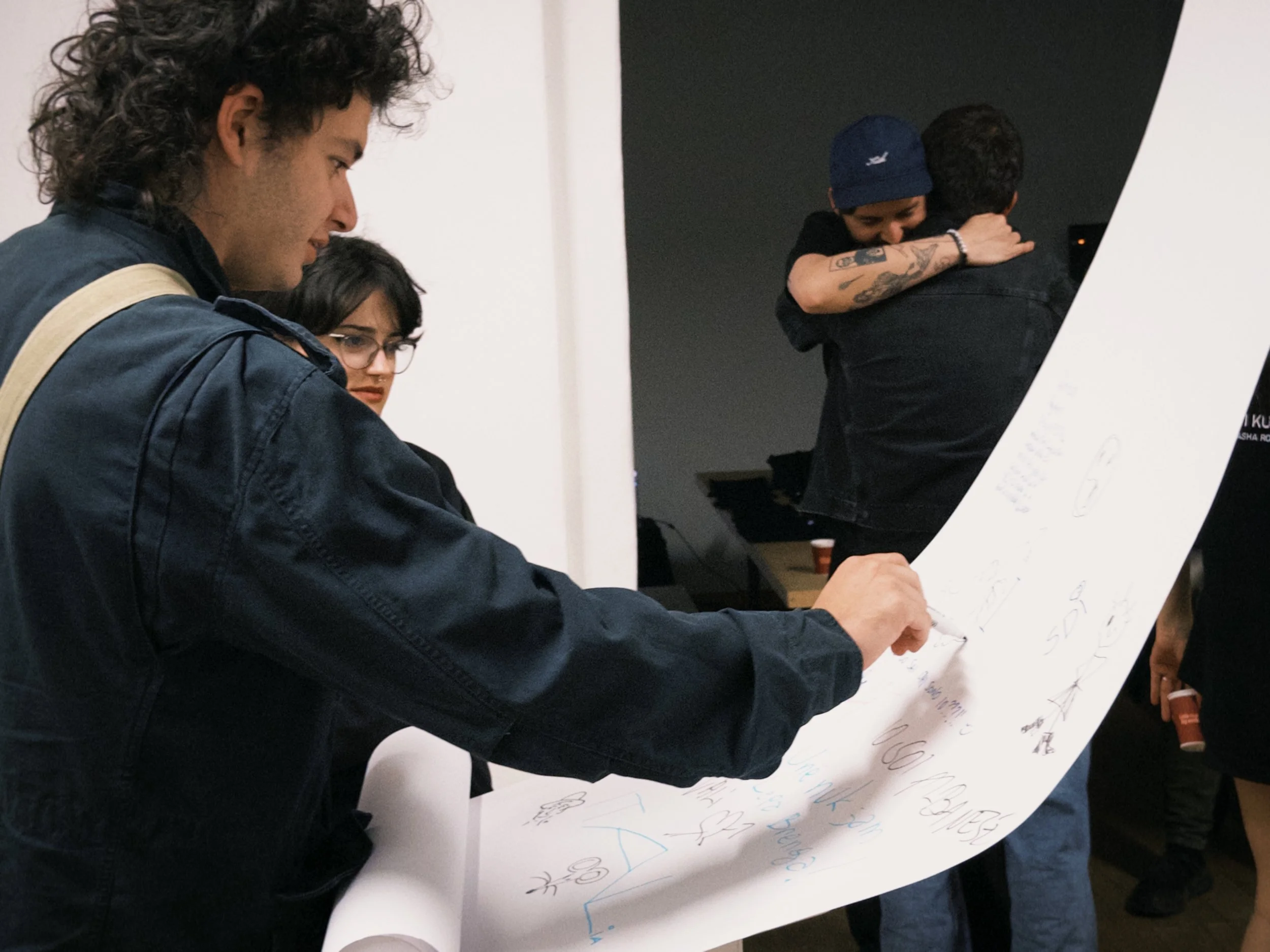
Everyday, something in our world is constantly intruding in our brain, ruthlessly competing for our undivided attention. In the space you are about to be welcomed in, the boundary between artist, artwork and viewer are blurred, inviting you to become not just a spectator, but an active part of the experience.
The presented works – in progress – are not static objects to be consumed, but conditions to be inhabited. Freed from the pressure of consumption, these artworks can only be perceived through your direct experience. The Space Between reimagines art as a soft infrastructure – an environment that holds space for reflection, inquiry and playfulness, while inviting us towards slowness and embodied experience. Approaching these conditions through the spirit of the Fluxus movement – where the boundary between art and daily life dissolves – artist Likana Cana argues that creation is transformation, and that artists are simply mediating the service of Art. The work already exists in space and time; your attention is the catalyst that reveals it.
The selected ‘scores’ (invitations to act) transform the former library Hivzi Sylejmani into a ‘third place’. The exhibition setting ceases to be a container and becomes a co-creative field, where attention is treated as a physical material and pausing is the gesture that makes it visible.
The exhibition is conceived not as a site of display, but as a hospitable environment — a space where one can exhale, dwell, and re-enter contact with oneself, others, and the surrounding world. Blending conceptual art and psychology, each room has been curated for the visitor to immerse into these moments: even the liminal spaces of corridors and restrooms are open with possibilities for chance connections.
The heart of the experience lies in the Japanese concept of Ma (間): the perceived negative space between things, or the seemingly empty interval in artworks that gives them meaning. Just as Ma is a pause in time that allows us to breathe, so does The Space Between, offering a sanctuary to feel and connect in the present – fostering a meditative dimension for inner and community growth.
Participation here is soft, optional, and open-ended. There are no rigid rules, only ephemeral invitations. This space is not meant to overwhelm you, but only to give back the time and experience that the modern world takes away. When attended to, these simple instructions become spells that transform the mundane into the extraordinary.
Are you ready to experience the magic of the everyday and engage all your senses?
LIST OF ARTWORKS / SCORES
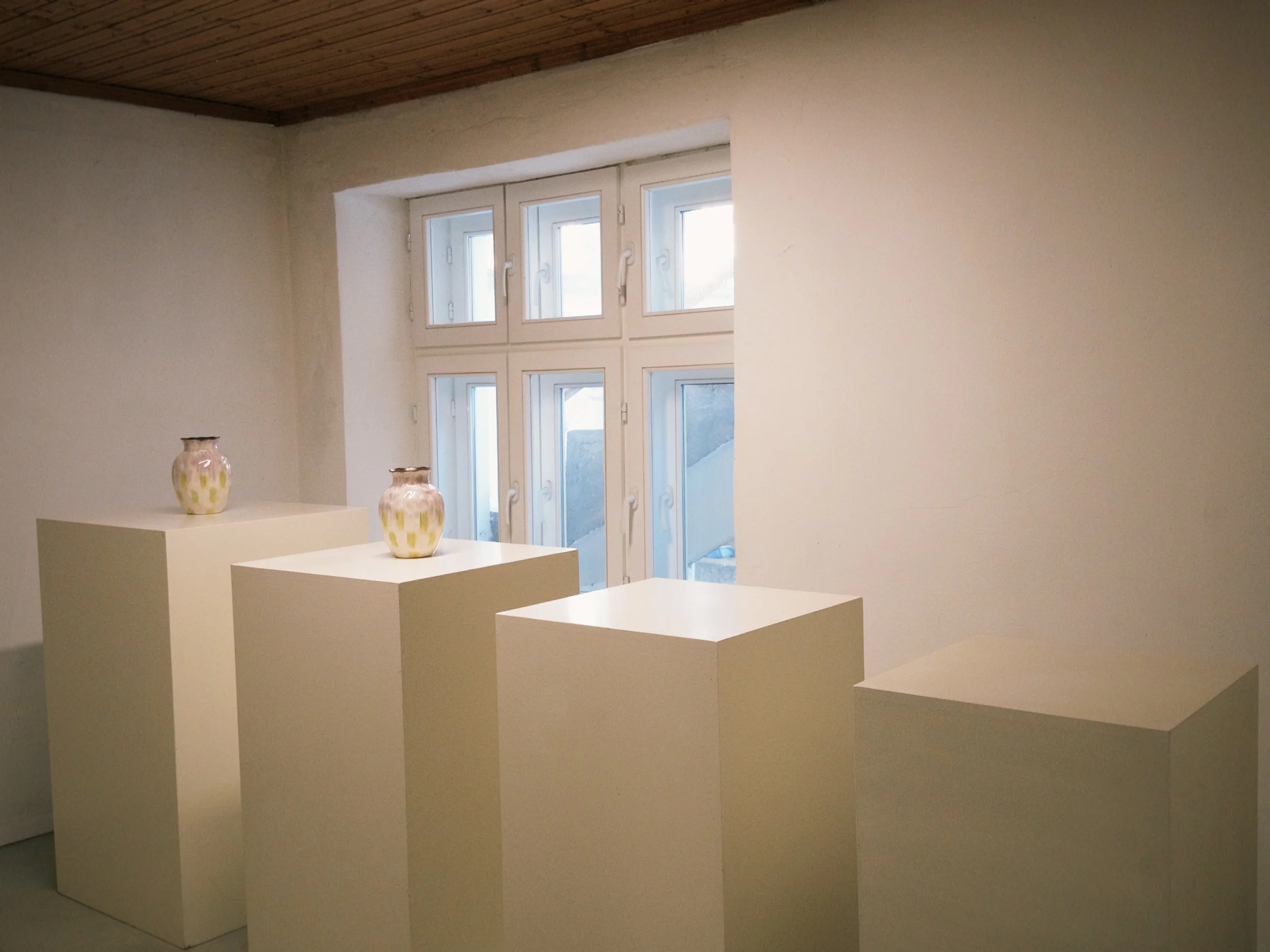
4 VASES
The work reflects the quiet incongruity between what is written, what is perceived, and what is actually present. It suggests that reality is never limited to what the eye can confirm. Some things exist at the edge of attention; others remain present even when they cannot be seen at all.
Vase 1 is here.
Vase 2 is here.
Vase 3 is here, but you are not yet focusing.
Vase 4 is here, but in another universe you have already broken it.
PAINTINGS
The first painting is a painting of parallel reality. The second painting reveals itself slowly, because the amount of time it takes for light to travel from the canvas to your brain is very long. Just focus.
WHEN AND WHERE IS “NOW” TO YOU?
The fact that the world agrees it is 1:00 PM does not necessarily mean it is 1:00 PM inside you.
While clocks synchronize society, our internal experience of time remains wildly uneven
The work invites viewers to consider their own internal timezone, the distance between clock time and lived time. We carry multiple temporalities within us: memories that remain present, futures that already shape our decisions, moments that seem endless, years that disappear in an instant.
Surrounded by multiple presents, viewers are asked to consider the elasticity of time and the impossibility of fully sharing a moment. What appears simultaneous is often lived differently. The “now” of one person may already be the past of another, or the future they are still waiting to arrive.
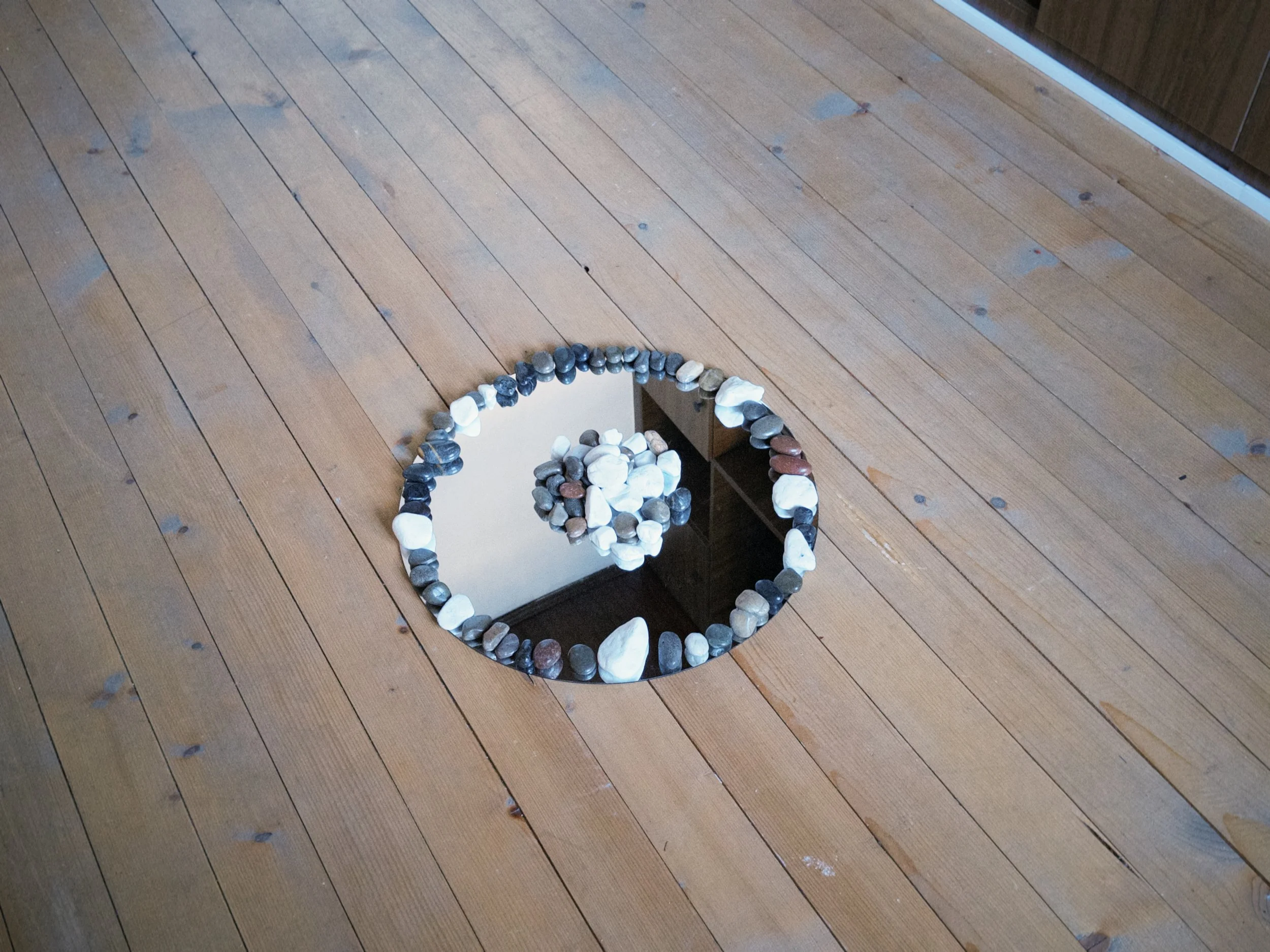
TRAP YOUR TROUBLES IN THIS CIRCLE
What is it for
To let go.
Instructions
Step inside the circle. Think about what is troubling you. Let it go and trap it inside the circle.
FLUXSHOP
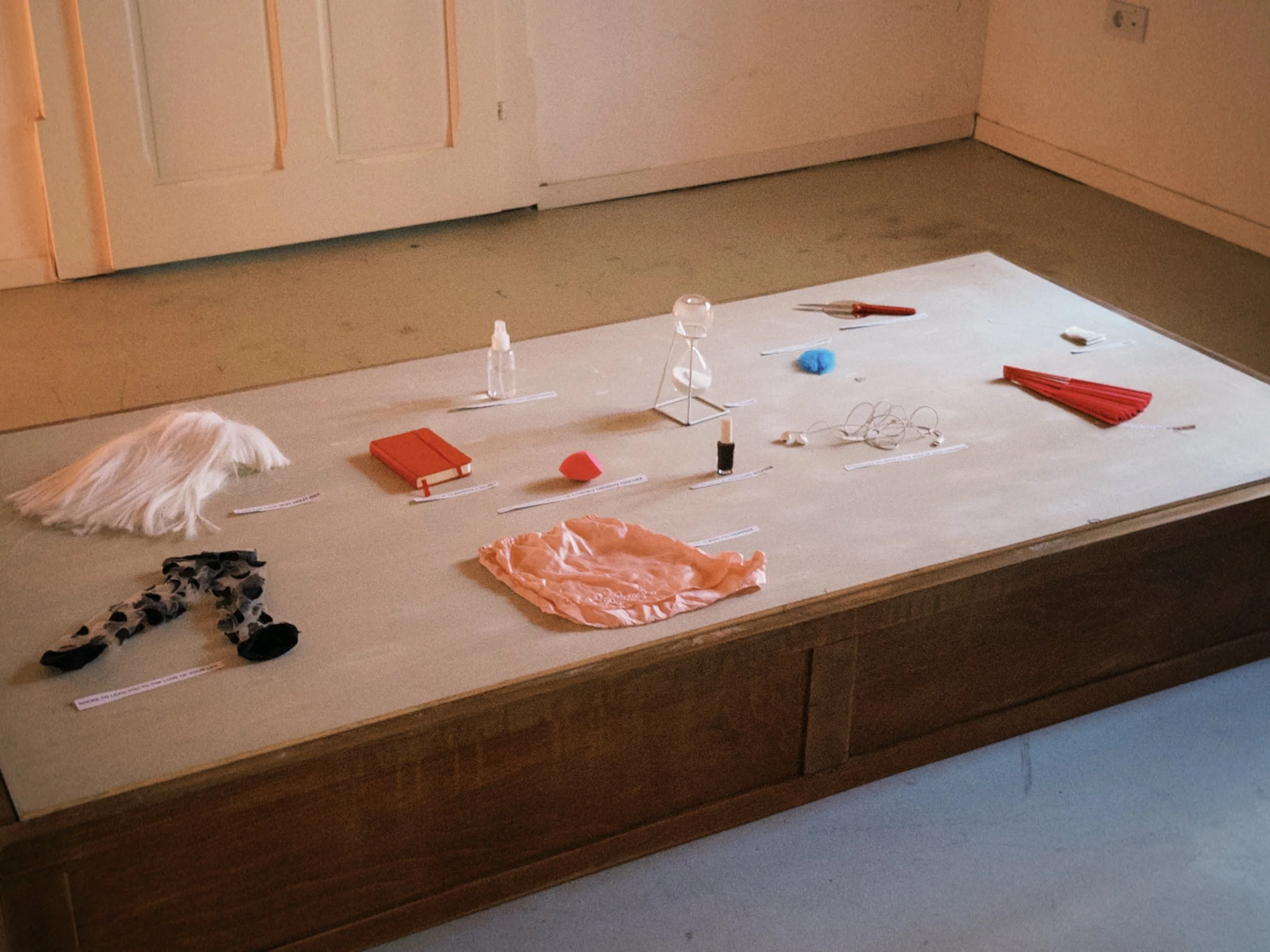
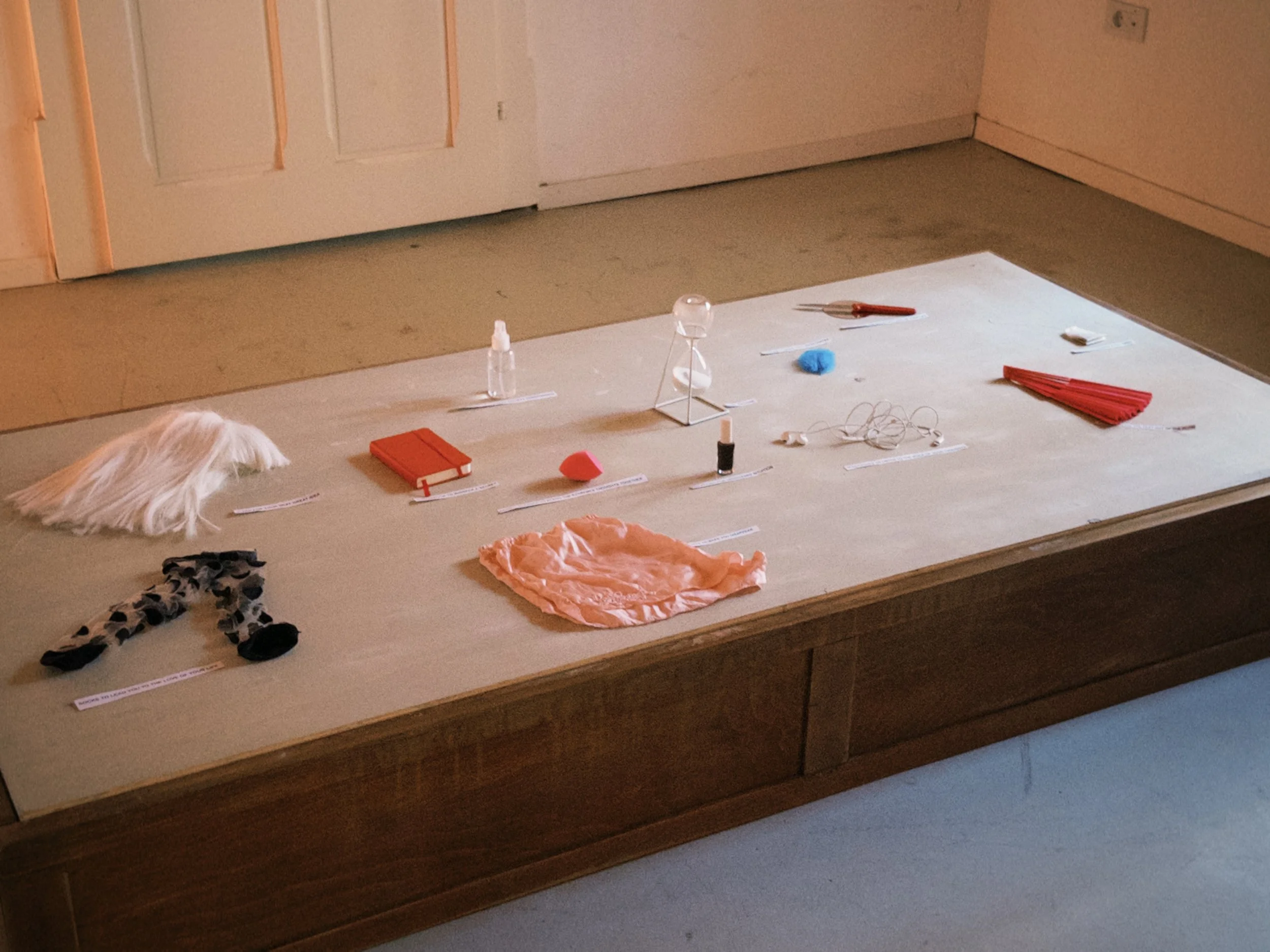
Is a parody of consumer desire and product commercialization, where everyday objects are reimagined not to sell a lifestyle, but to expose how deeply we have been taught to buy meaning. Here, utility slips into poetry, and products become small spells for survival, transformation, and desire.
The work also turns its gaze toward the gallery itself. Contemporary artworks often circulate through similar systems of value production, branding, aspiration, and consumption. The artwork, like the commodity, increasingly promises transformation: insight, identity, distinction, belonging, enlightenment. FLUXSHOP exaggerates this logic to the point of absurdity, offering products that fulfill emotional, spiritual, and existential needs directly.
SIT, HAVE A CONVERSATION
What is it for
Conversation becomes the artwork, the sofa is the medium.
Instructions
Sit down, enjoy a conversation, or simply the gesture of sitting down and feeling cozy.
The work places relationality at its center, treating presence, exchange, and shared time as the core material. It also proposes the sofa as a third space: neither private nor fully public, neither purely functional nor entirely symbolic. In an age where so much is surgically displayed inside galleries, this work shifts attention away from exhibition and toward encounter. Here, meaning emerges not from looking, but from being together.
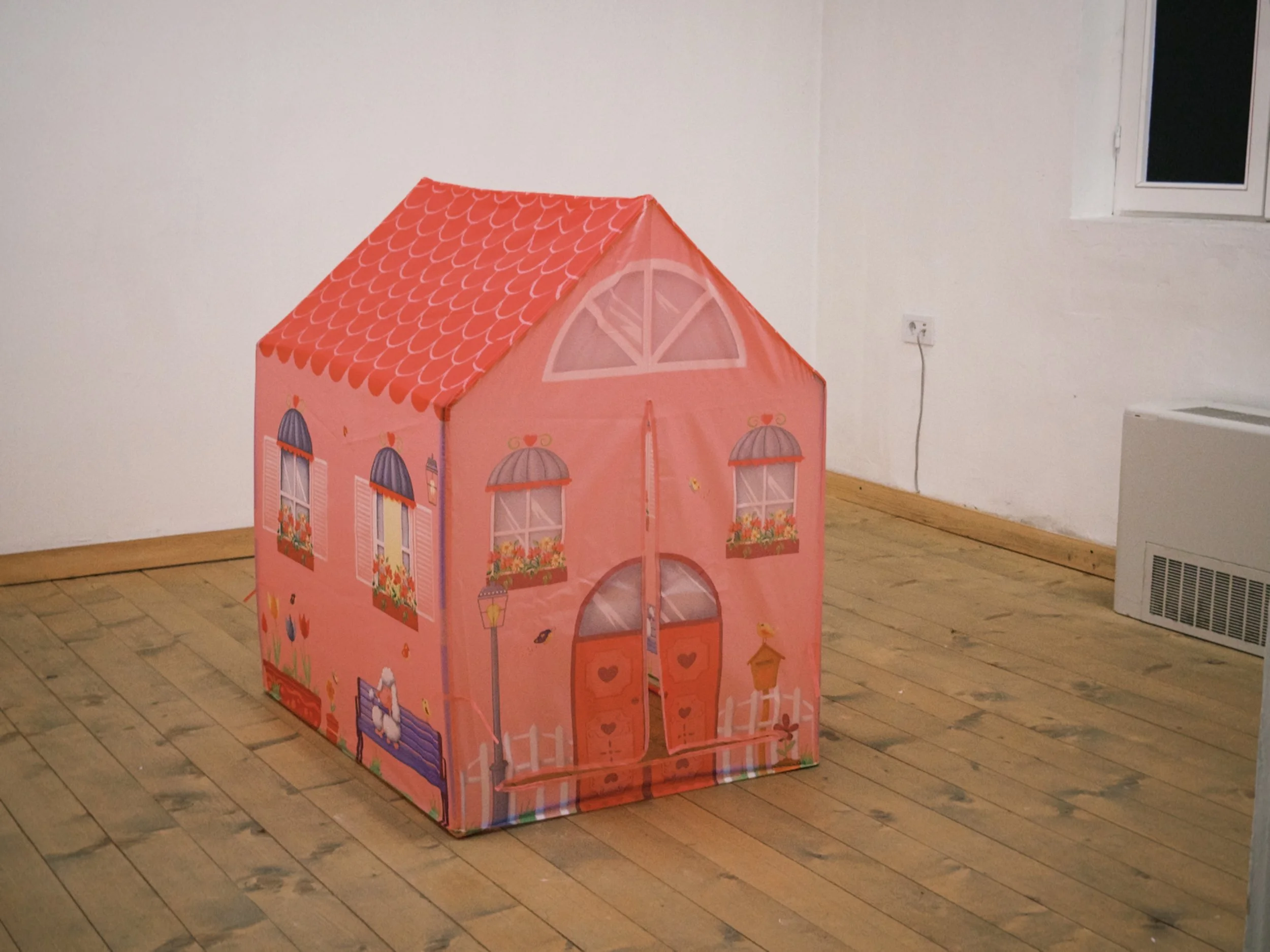
DOLL HOUSE
What is it for
A reflection on the exhibition space as a medium in itself. The remainder of the exhibition exists inside a doll house.
Instructions
To view, you must shrink in size and enter. You may need to shrink your ego, your thoughts, your assumptions, your body, or your sense of importance.
The work draws attention to the role of space in shaping how artworks are experienced. Scale is never neutral: a cathedral can make an idea feel monumental, while a small corner can make it intimate, secret, and alive. We often imagine that meaningful experiences require grand settings, yet transformation frequently occurs in the smallest of spaces. Sometimes all that is needed is a corner and the willingness to imagine it as a castle.
By miniaturizing the exhibition, the work invites viewers to reconsider the relationship between size and significance. What appears small may contain entire worlds. What appears insignificant may be vast.
COLLECTIVE SCULPTURE
What is it for
To build something together: a small ritual reflecting on beginnings, endings, and the constant effort required to keep things alive, moving, and becoming.
Instructions
Build a tower with these rocks. You may add only one rock.
Sometimes you will be the person who places the first stone. Sometimes you will add the final stone before the tower collapses. Sometimes your contribution will appear insignificant; sometimes it will change everything.
The work reflects on the cyclical nature of all things. Endings and beginnings often stand much closer together than they seem. Every structure, relationship, institution, community, and life is the result of countless small contributions made by different hands across time. No one builds the tower alone, and no one is solely responsible for its collapse.
As the sculpture repeatedly rises and falls, it becomes a reminder that creation is rarely a singular event but an ongoing process of participation. We inherit what others have started, add what we can, and leave something for those who come after us.
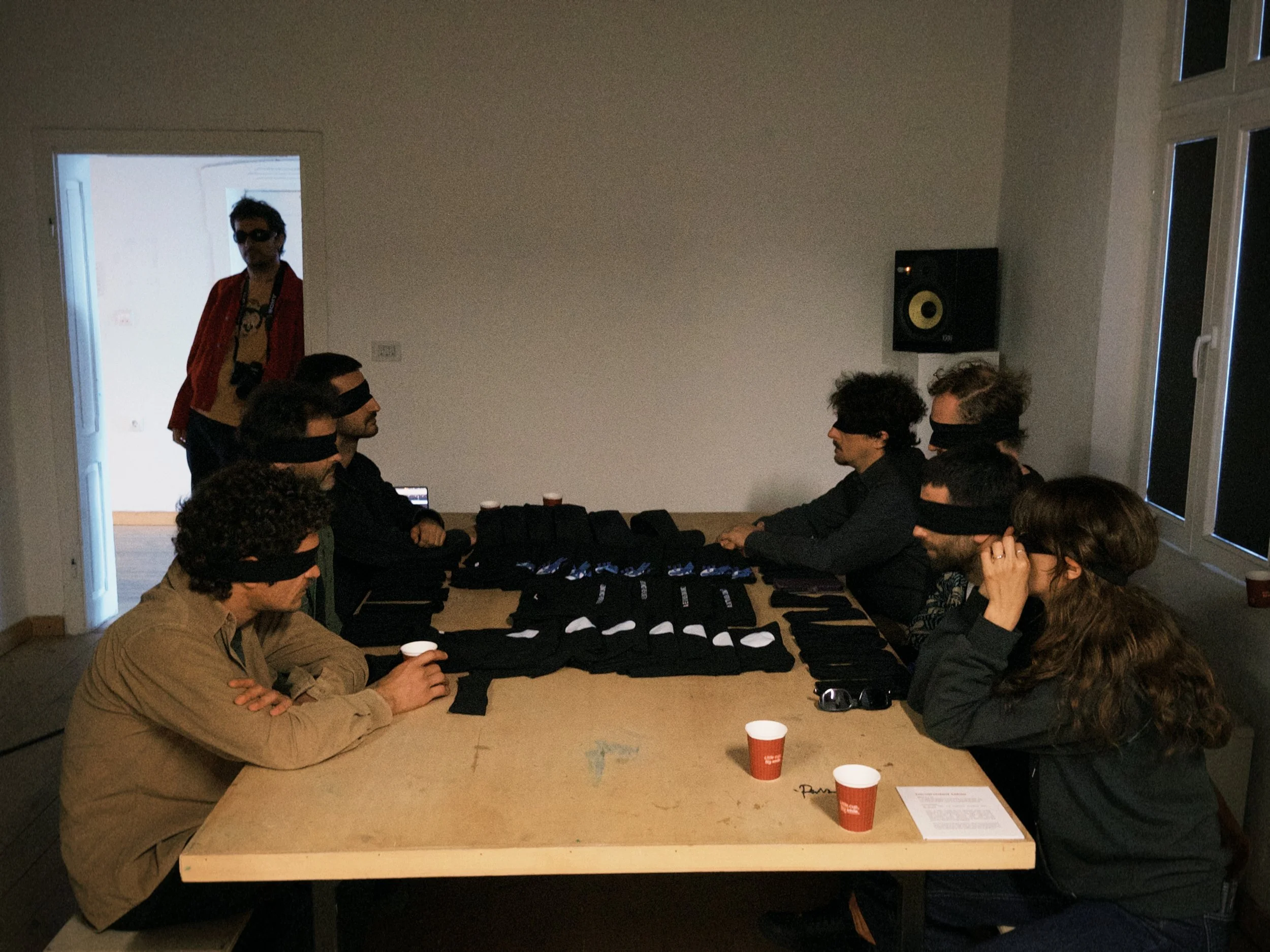
BLINDFOLDED TABLE
What is it for
To engage the senses by temporarily removing sight. Eat something blindfolded. Listen to a song blindfolded. Kiss someone blindfolded. Have a conversation blindfolded.
Instructions
Sit at the table and experience something while blindfolded.
Vision is often treated as the dominant sense, quietly organizing our relationship to the world and to one another. This work proposes a temporary suspension of that hierarchy. By removing sight, attention is redistributed: texture becomes more vivid, sounds become more precise, tastes become more complex, and presence becomes more palpable.
The work asks a simple question: what becomes available when seeing is no longer the primary way of knowing? In a culture saturated with images, perhaps closing the eyes is not a withdrawal from experience, but a return to it.
I
What is it for
To play with the artwork label as a medium, reimagining explanation itself as a site of artistic practice.
Instructions
The artwork is the letter “I.” The curatorial label is also part of the artwork.
In many exhibitions, the artwork and its explanation exist in a delicate tension. Labels, statements, and curatorial texts are intended to support interpretation, yet they often become inseparable from the work itself, sometimes occupying as much attention as the object they describe. Meaning is not only produced by what is shown, but also by what is said about what is shown.
This work makes that relationship explicit. By presenting a minimal artwork alongside an invitation to interpret it, the piece shifts part of the artistic act onto the viewer. The artist statement becomes material. The explanation becomes content. The act of interpretation becomes a form of participation.
STAY IN THIS ROOM UNTIL ANOTHER PERSON ENTERS
What is it for
To highlight the entanglement between people and the role of chance encounters in shaping our lives.
Instructions
Remain in this room until another person enters. Only then may you leave.
We often imagine ourselves as autonomous individuals moving through the world according to our own intentions. Yet much of life is determined by encounters we did not plan: a stranger, a conversation, a coincidence, a brief crossing of paths. Entire relationships, careers, beliefs, and futures can emerge from moments that initially appear insignificant.
This work transforms waiting into a form of awareness. Your ability to leave becomes dependent on the arrival of another person. What appears to be an individual action is revealed as a collective event.
SPACE TO DISAPPEAR
What is it for
A conceptual space for disappearing.
Instructions
Enter and pretend you are not there.
For a moment, release your identity, your responsibilities, your story, and your need to be perceived. Nothing is required of you here.
You may now disappear.
A ROOM WHICH SMELLS OF LAVANDER
What is it for
A dedicated room where smell becomes the artwork itself.
Instructions
Smell the artwork.
This work shifts attention away from the dominance of the visual and places perception within the body as a whole. It also points toward the immaterial dimension of art. Not everything in an exhibition takes form as object or image; some works exist as atmosphere, duration, sensation, and relation. Here, the artwork cannot be owned, preserved, or fully captured
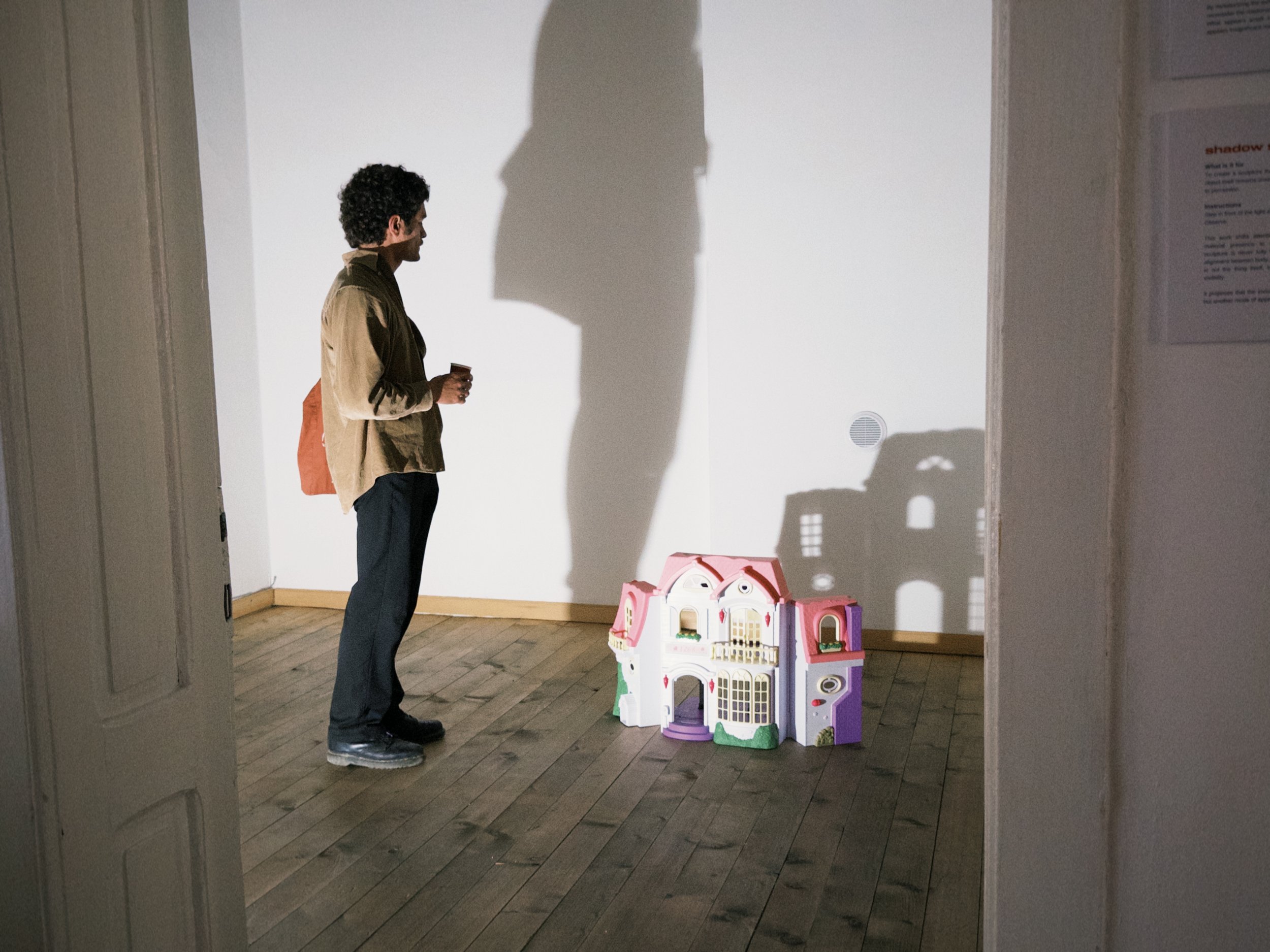
SHADOW SCULPTURE
What is it for
To create a sculpture that exists only as a shadow. The object itself remains unseen; only its projection is available to perception.
Instructions
Step in front of the light and make a shadow sculpture. Observe.
This work shifts attention from object to trace, from material presence to immaterial consequence. The sculpture is never fully there, it is always an effect of alignment between body, light, and surface. What is seen is not the thing itself, but its passing negotiation with visibility.
It proposes that the invisible is not the absence of form, but another mode of appearance.