CURARTE - Art & Health in Public Space #5: A ESPERA FERTIL (The Fertile Wait)
16.01.2026 to 29.05.2026
Branca Health Centre, Branca (Albergaria-a-Velha), Portugal
Curated by Raffaella Matrone
Artists:
Bonny Nahmias, Clara Leitão, Diana de Brito, Juliana Matsumura, Rafael Masson, Sally Santiago
Photographic Credits: Sandra Teixeira, courtesy of Associação Quinta das Relvas.
Project coordinated by the Quinta das Relvas Association in partnership with the Municipality of Albergaria-a-Velha and UCSP Branca, and supported by the Directorate-General for the Arts.

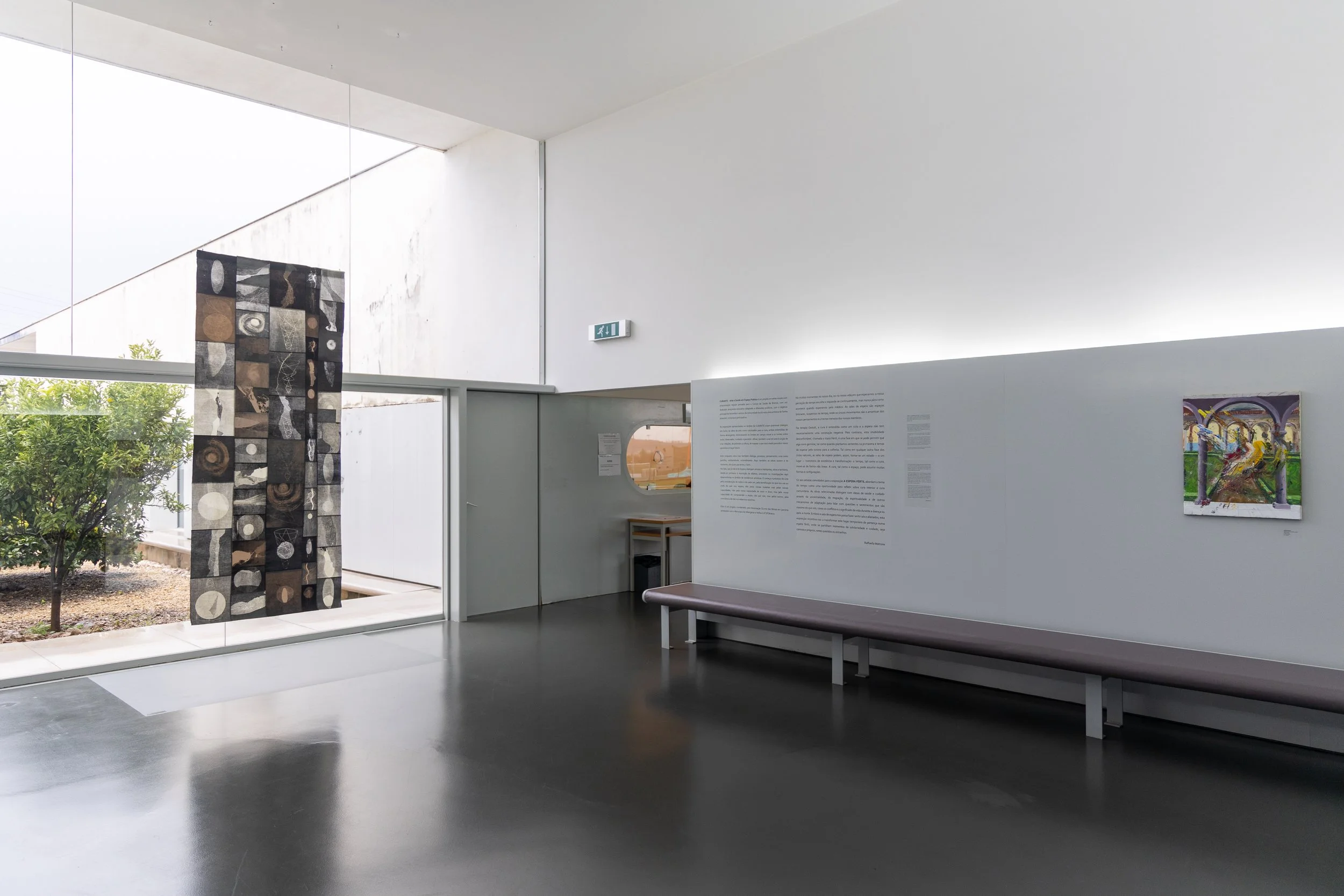
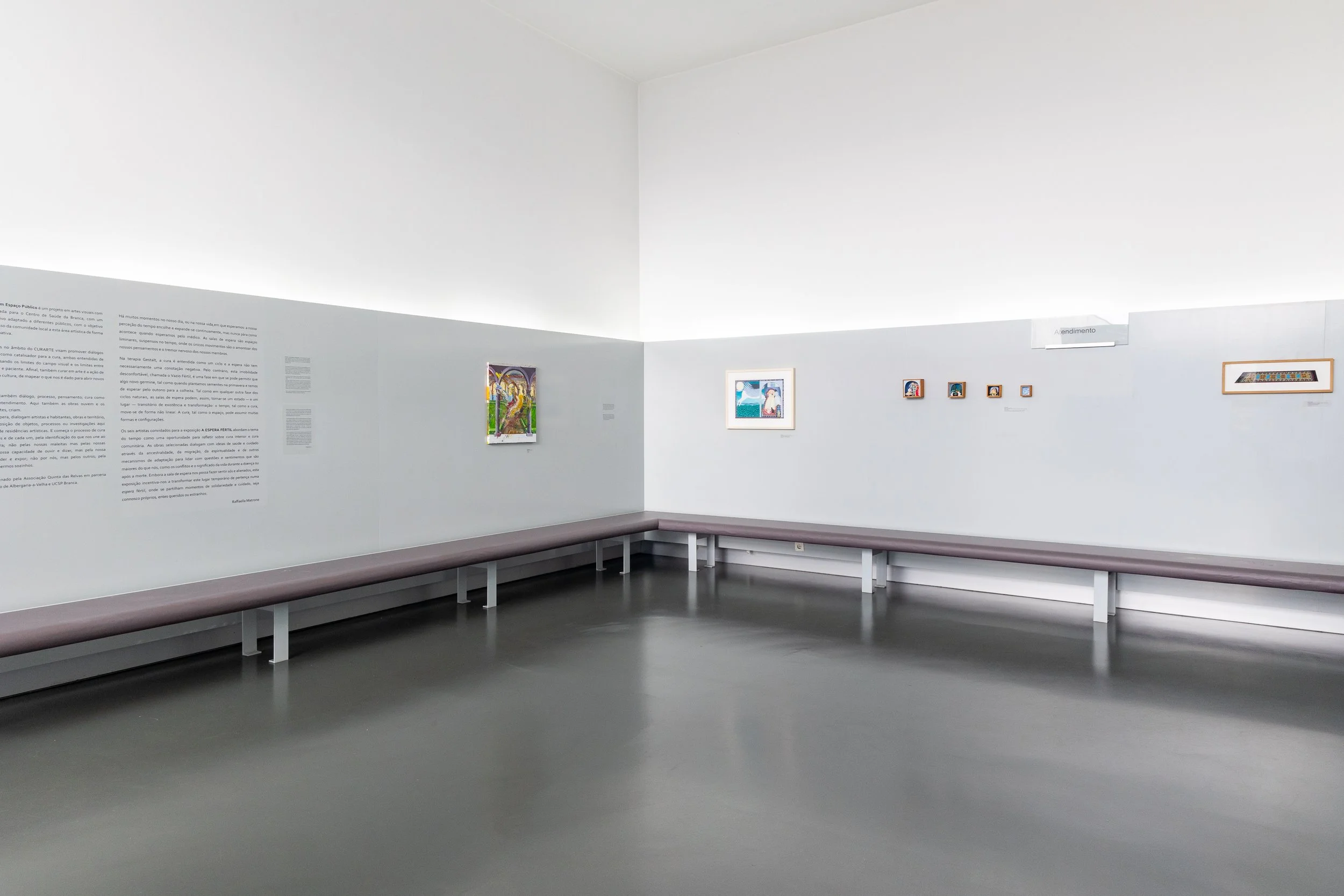
The exhibitions presented as part of CURARTE aim to promote dialogues around the idea of art as a catalyst for healing, both understood in a comprehensive way, going beyond the limits of the visual field and the boundaries between author, observer, caregiver and patient. After all, healing in art is also the action of creating relationships, of pollinating culture, of mapping what is given to us in order to open up new paths and chart the future. Art as a work but also as a dialog, process, thought; healing as sharing, solidarity, understanding. Here, too, the works listen and the visitors, who are patients, create. In the Room, which is no longer a Waiting Room, artists and inhabitants, artworks and territory interact, giving priority to the exhibition of objects, processes or research developed here as part of artistic residencies. And the healing process begins by considering each and every one of us, by identifying what unites us rather than what separates us; not by our ailments but by our abilities; not by our ability to listen and say, but by our ability to understand and expose; not by ourselves, but by others; by the awareness of not knowing ourselves alone.
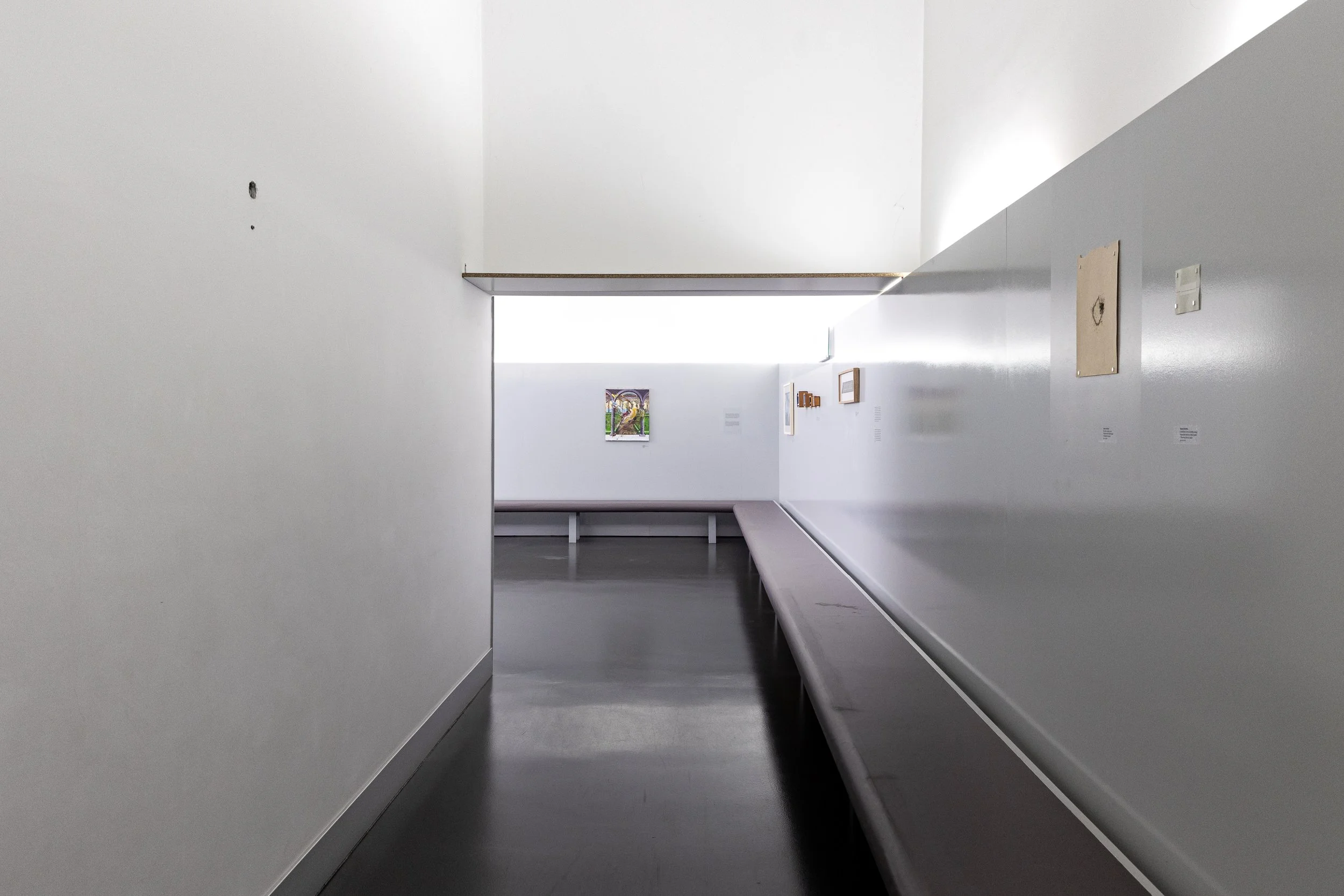
There are many occasions in our day, or life, that we find ourselves waiting: our perception of time constantly shrinks and expands, and yet, never really stops like when we wait for the doctor. Waiting rooms are a liminal space suspended in time, where the only movements are the crowding of our thoughts and shaking of our nervous limbs.
In Gestalt therapy, healing is seen as a cycle and waiting does not necessarily have a negative connotation. On the contrary, this uncomfortable stillness called the Fertile Void is a phase where one can allow for something new to germinate, in the same way as when we plant seeds in Spring and must wait Autumn to harvest. Like any other phases of natural cycles, waiting rooms can therefore become a transitional state – and place – of being and transformation: time, like healing, moves in a non-linear way. Healing, like space, can take many shapes and forms.
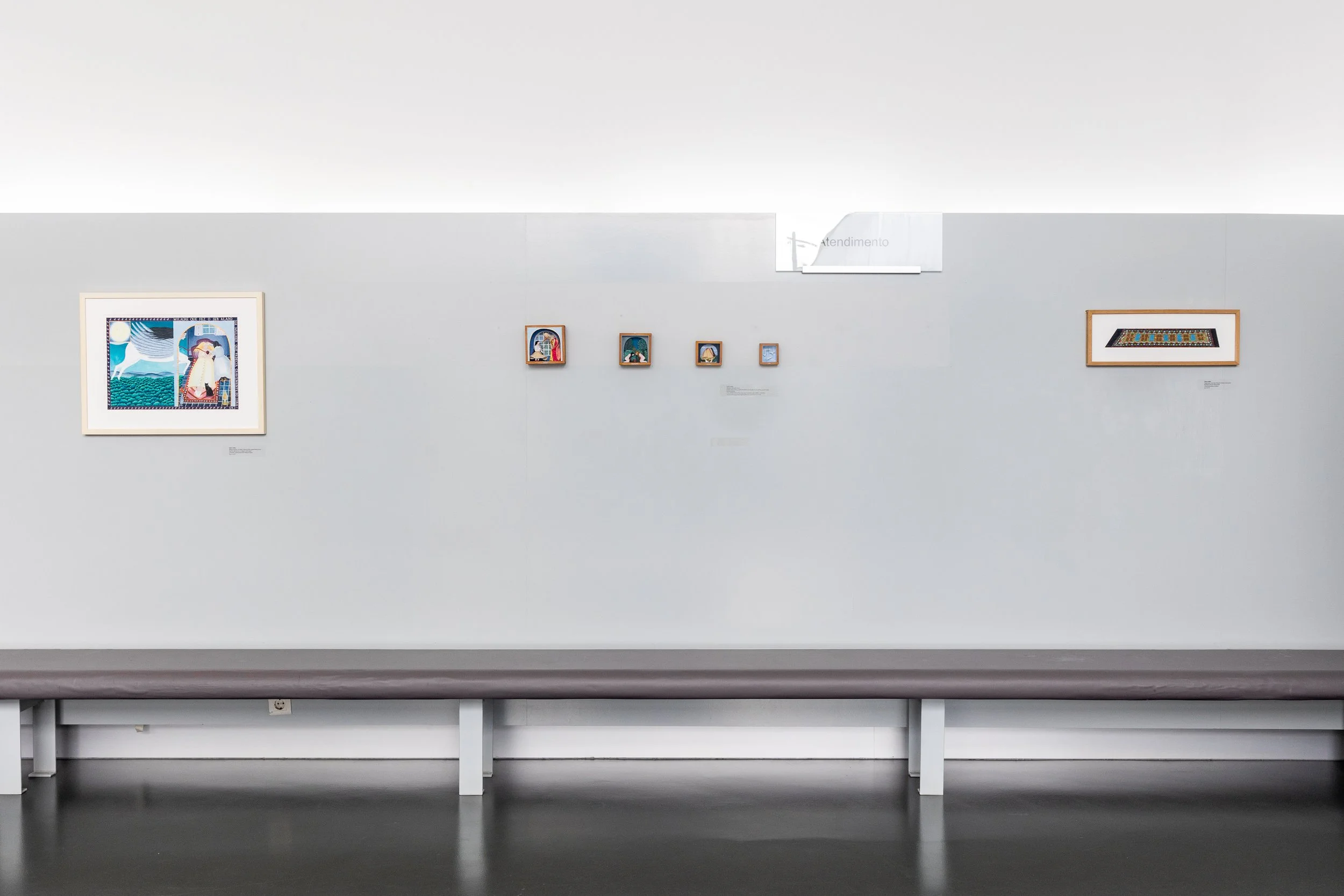
The six invited artists in this exhibition approach the theme of time as an opportunity to reflect on inner healing and community healing. The selected works engage with ideas of health and care through ancestry, migration, spirituality and other coping mechanism to deal with some questions and feelings that are bigger than us, like conflicts and the meaning of life during sickness or after death. While the waiting room can make us feel lonely and alienated, theexhibition encourages us to make this temporary place of belonging a fertile wait to share moments of solidarity and care, either within ourselves or with accompanying loved ones and strangers.
Rafael Masson leads the journey towards personal healing by identifying in the cloister of the monastery of Guimarães a quiet place for calmness and reflection. Starting from a recognizable architectural space, he introduces a gesture that disrupts illusion and exposes the physical presence of feelings through painting. This state between clarity and confusion shows us that focussing on the present can be an occasion of inner spiritual healing.
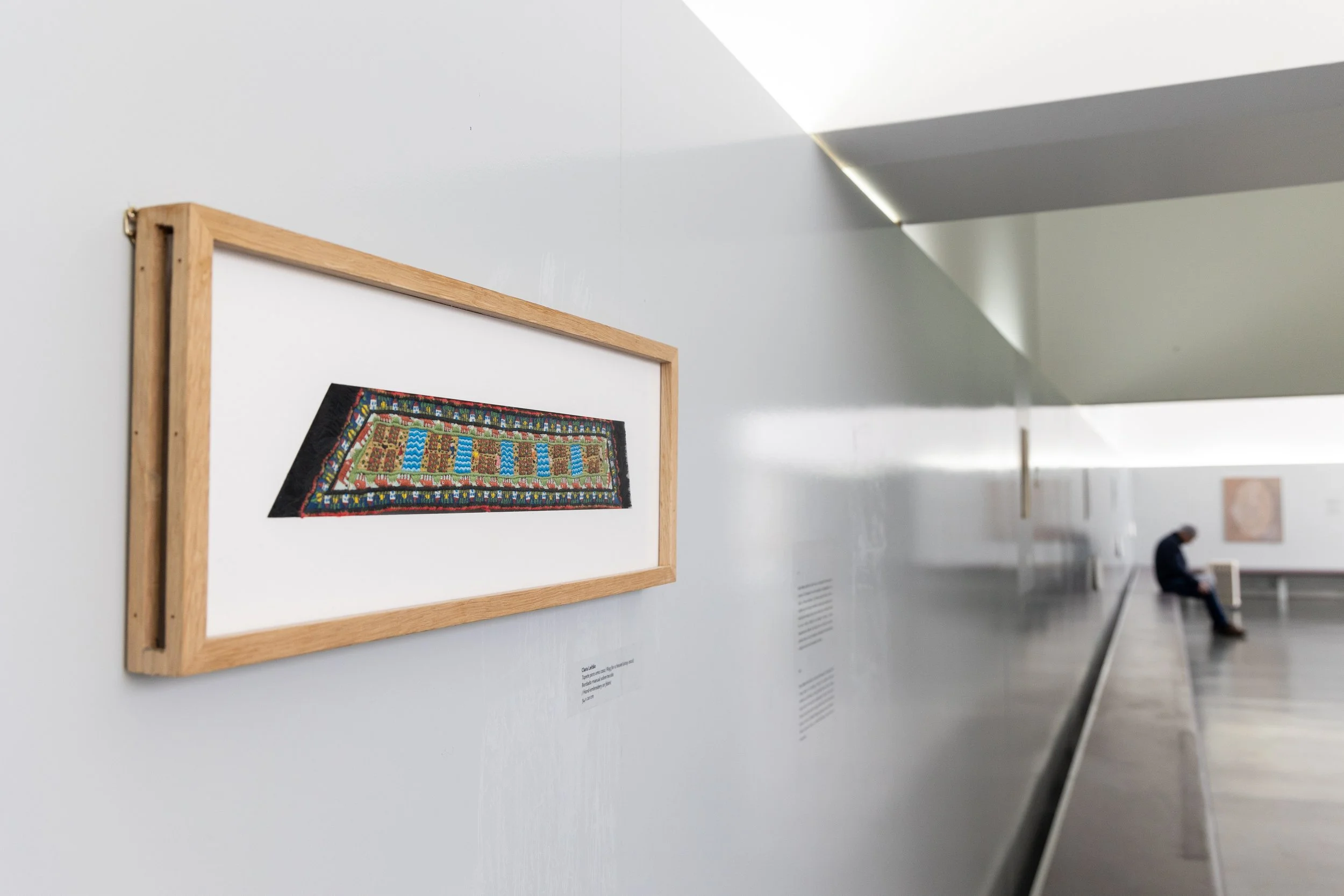
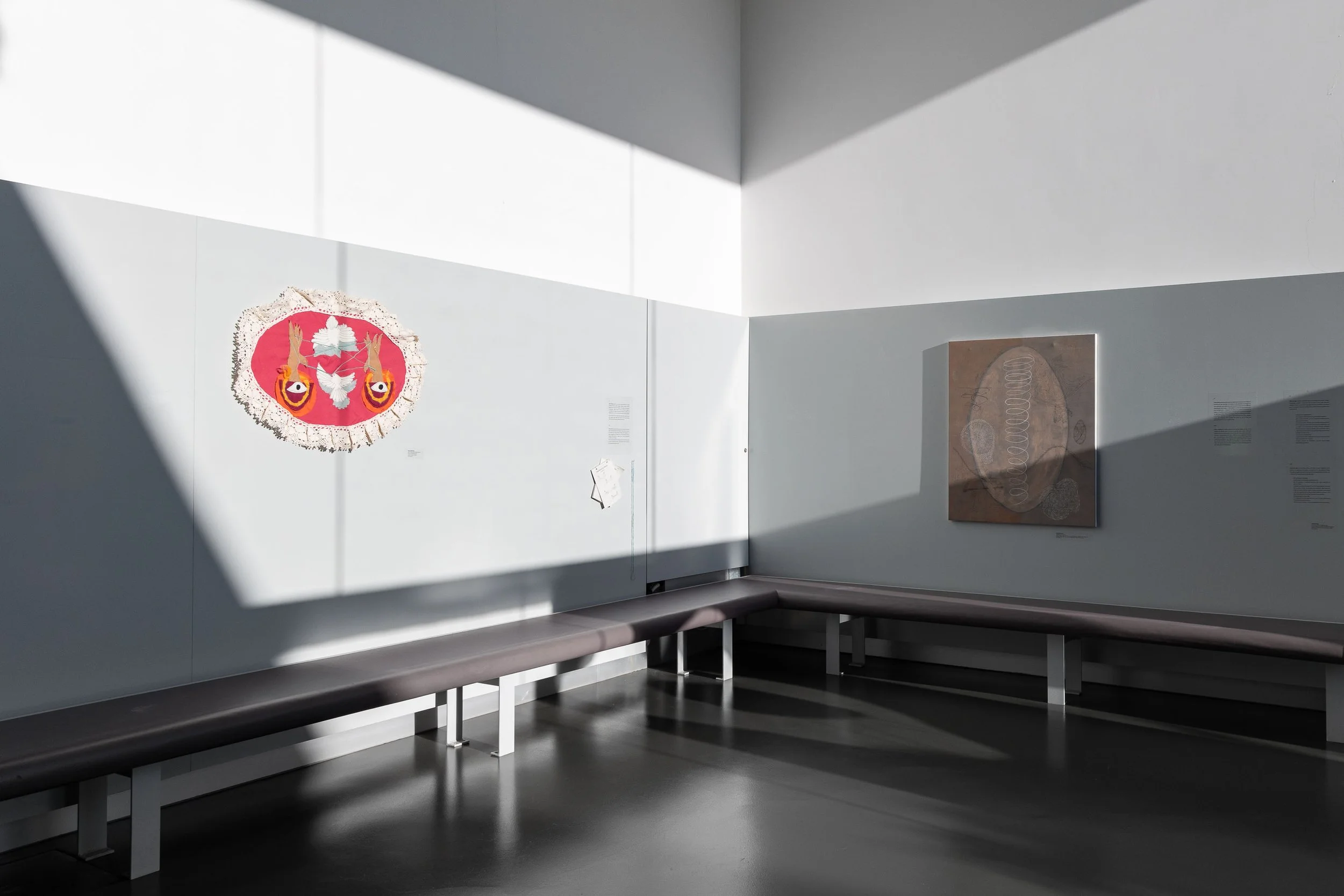
Clara Leitão further explores the idea of how healing can both happen while turning inwards or to spirituality: she stays in the present with the slow meditative act of embroidery, nurturing the idea that care and love are always present both on the material and spiritual planes. Through her ex-votos, she conveys a sense of surrender and mystery, which is often present during healing processes. Every act of healing (listening, germinating, hugging and flying) is a miracle, and every miracle is a reminder that change is often necessary for improvement.
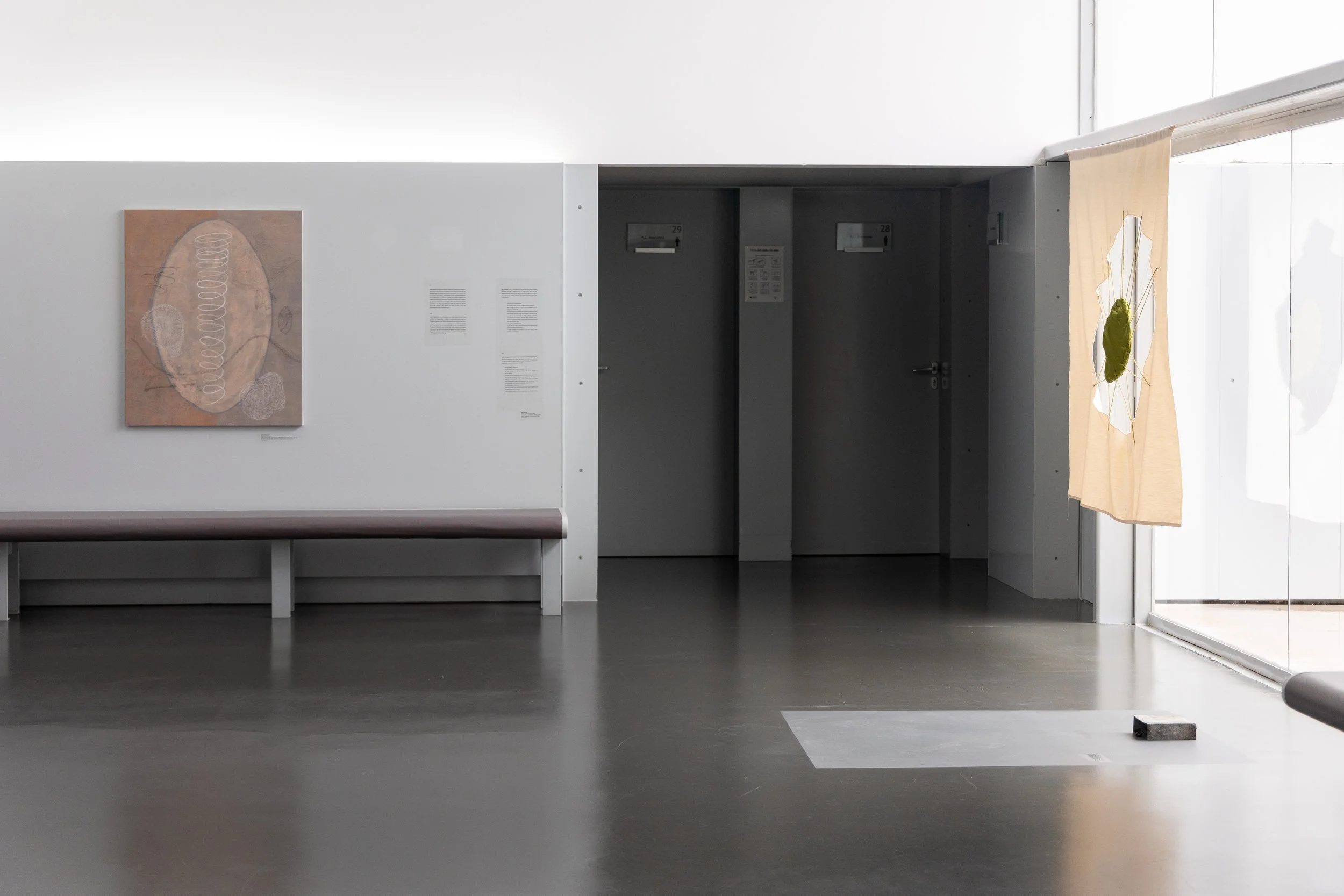
Juliana Matsumura notices traditional and spiritual aspects of care in the butsudan (lit. Buddha altar): a temple or domestic altar found in the most traditional Japanese homes which serves to keep the memory of ancestors alive. This space - materialised at the centre of Matsumura’s grandparents’ domestic life - is the starting point of revisiting the paths, journeys, and questions that marked her grandparents' lives migrating from Japan to Brazil. In her research she connects memories and movements of migrations as a spiral: a non-linear shape that according to James Bell Pettigrew is present in all beings and was potentially the primordial form of all.
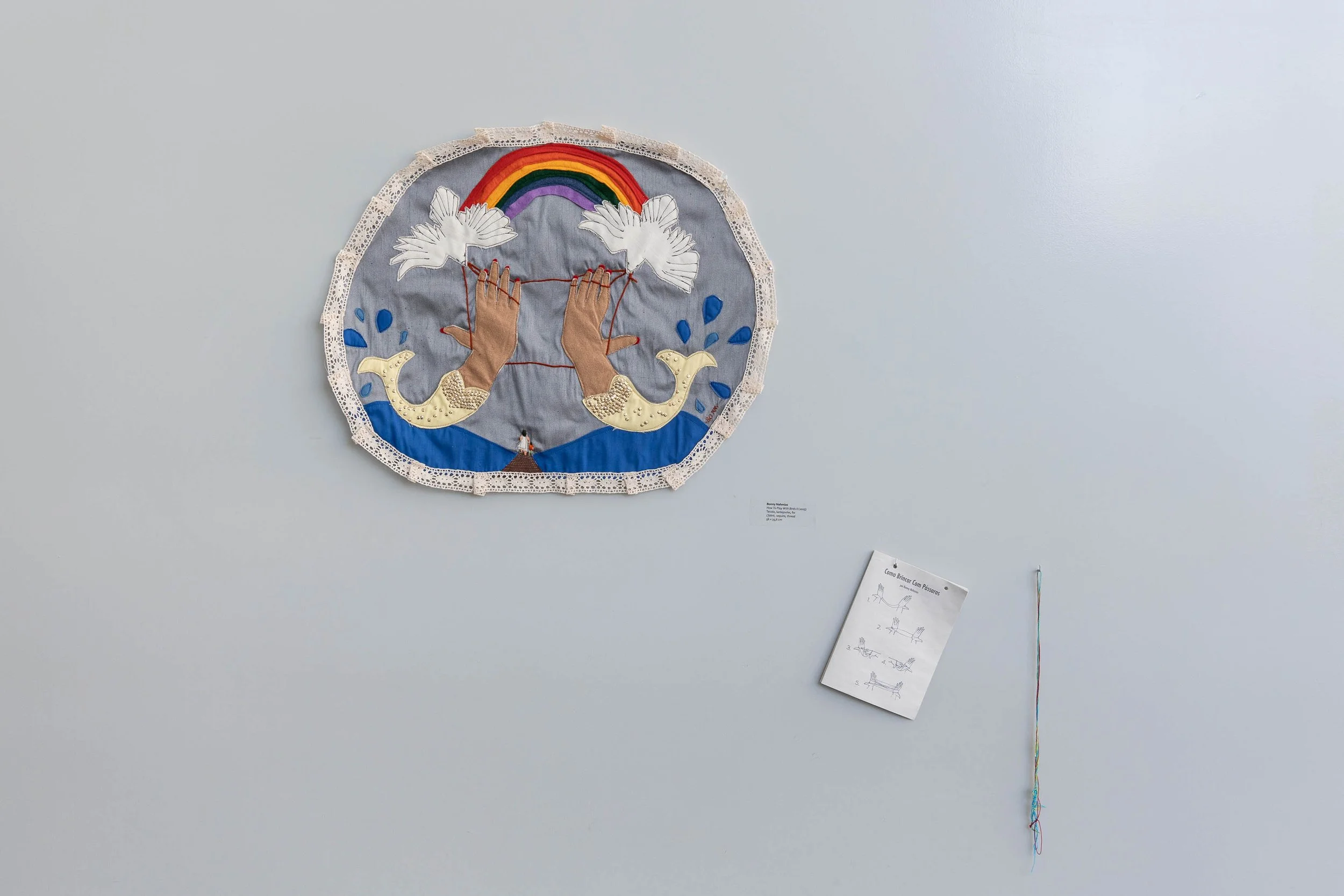
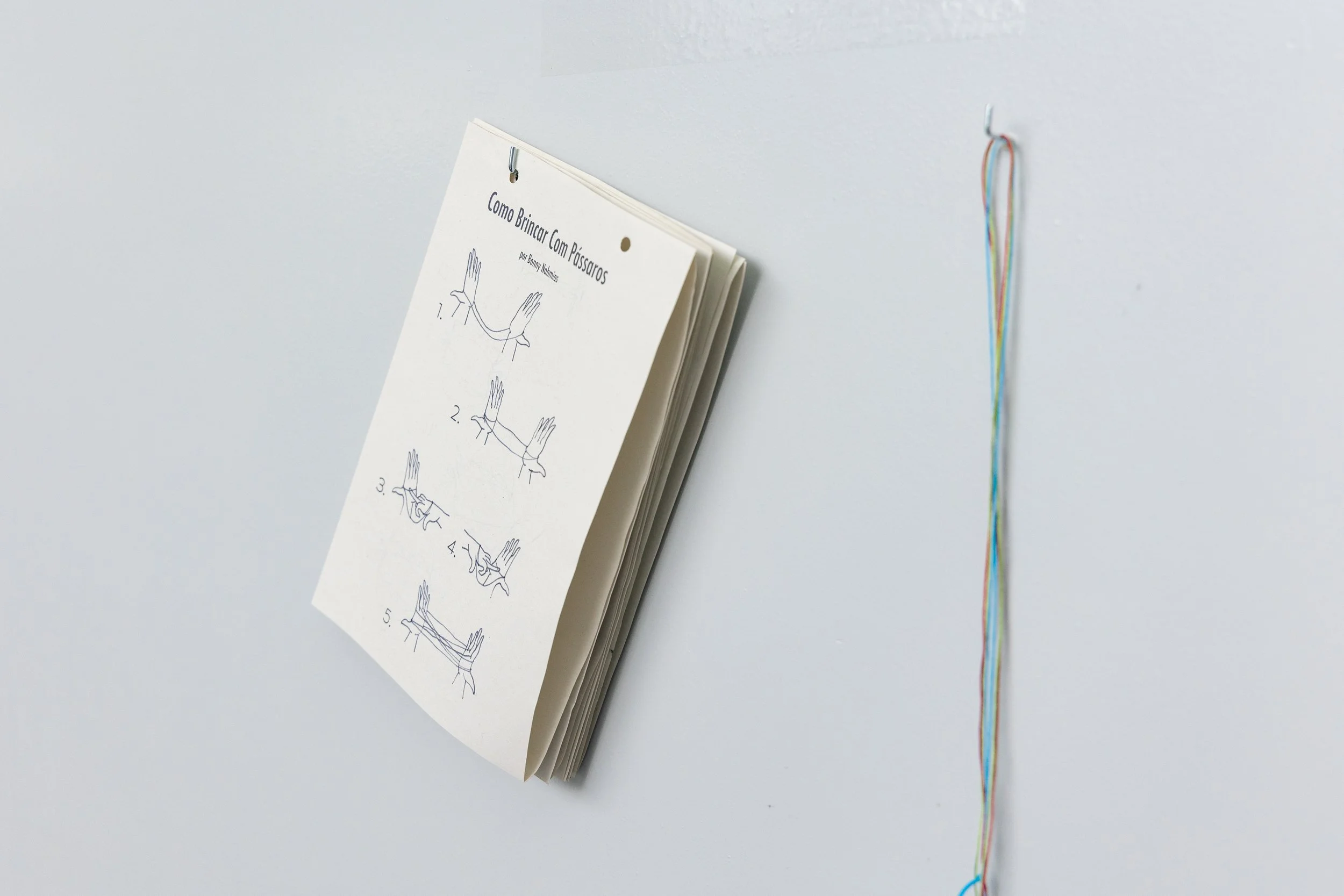
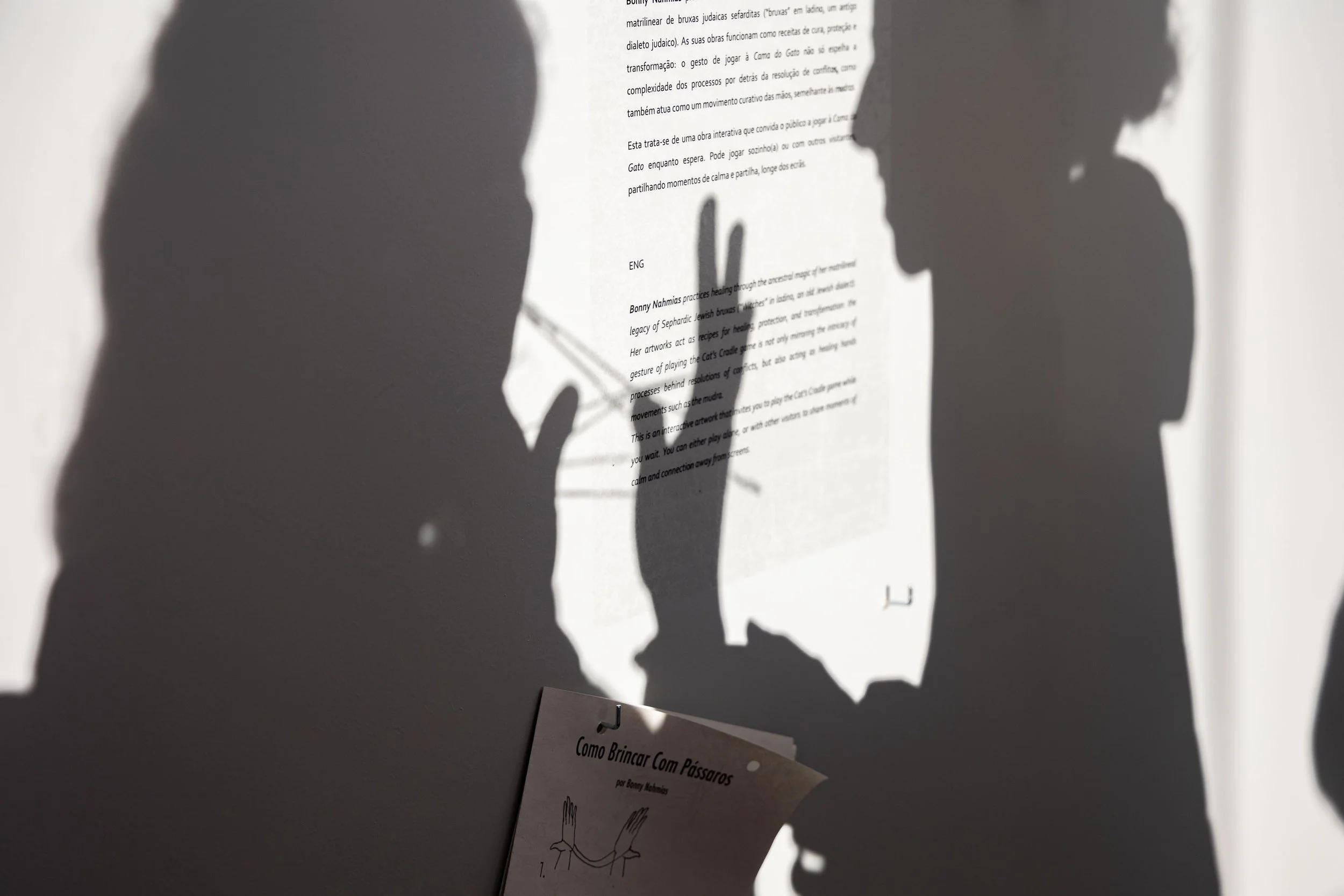
Bonny Nahmias practices healing through the ancestral magic of her matrilineal legacy of Sephardic Jewish Brushas (“Witches” in Ladino, an old Jewish dialect). Her artworks act as recipes for healing, protection, and transformation: the gesture of playing the Cat’s Cradlegame is not only mirroring the intricacy of processes behind resolutions of conflicts, but also acting as healing hands movements such as the Mudra.
This is an interactive artwork that invites you to play the Cat’s Cradle game while you wait. You can either play alone, or with other visitors to share moments of calm and connection away from screens.
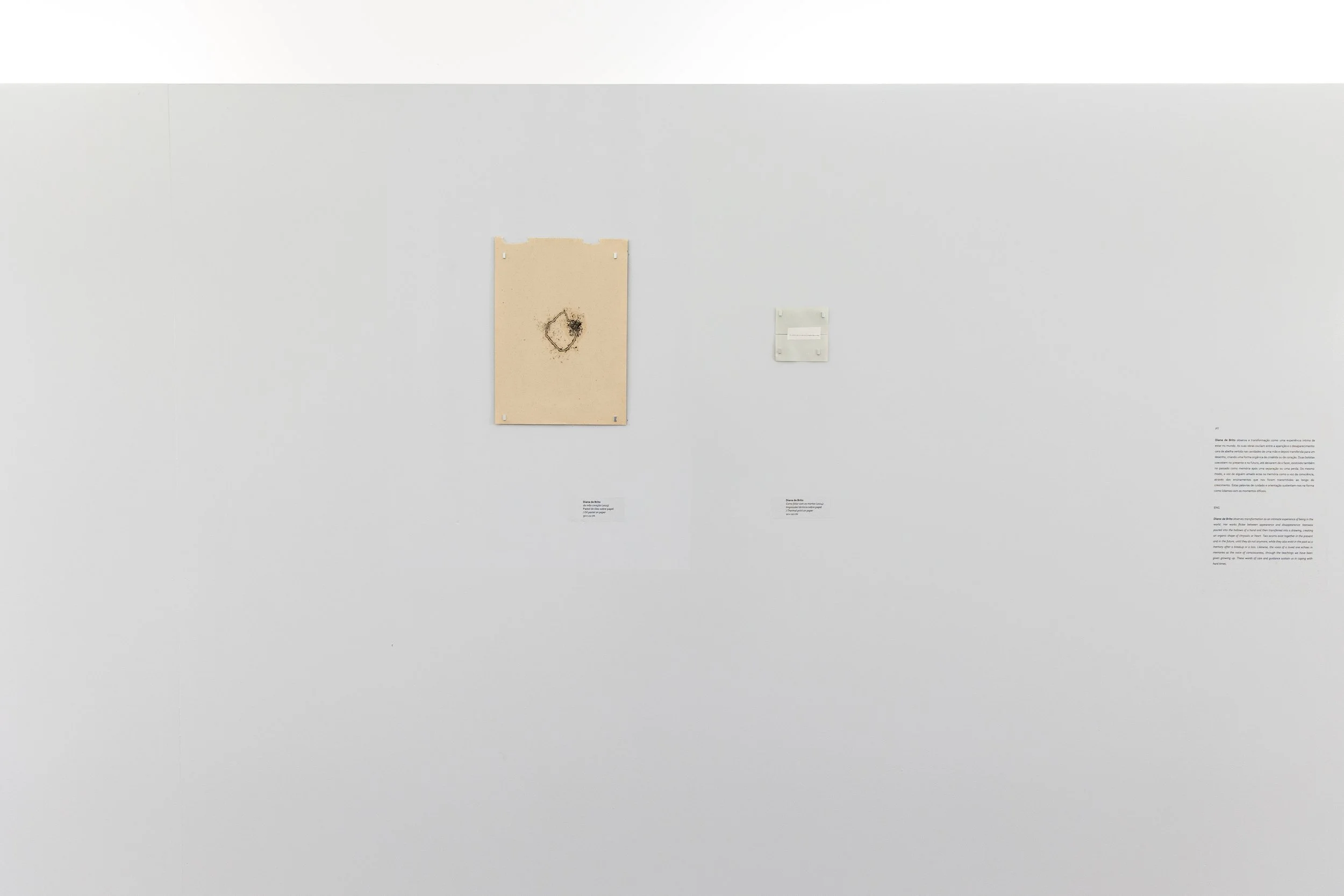
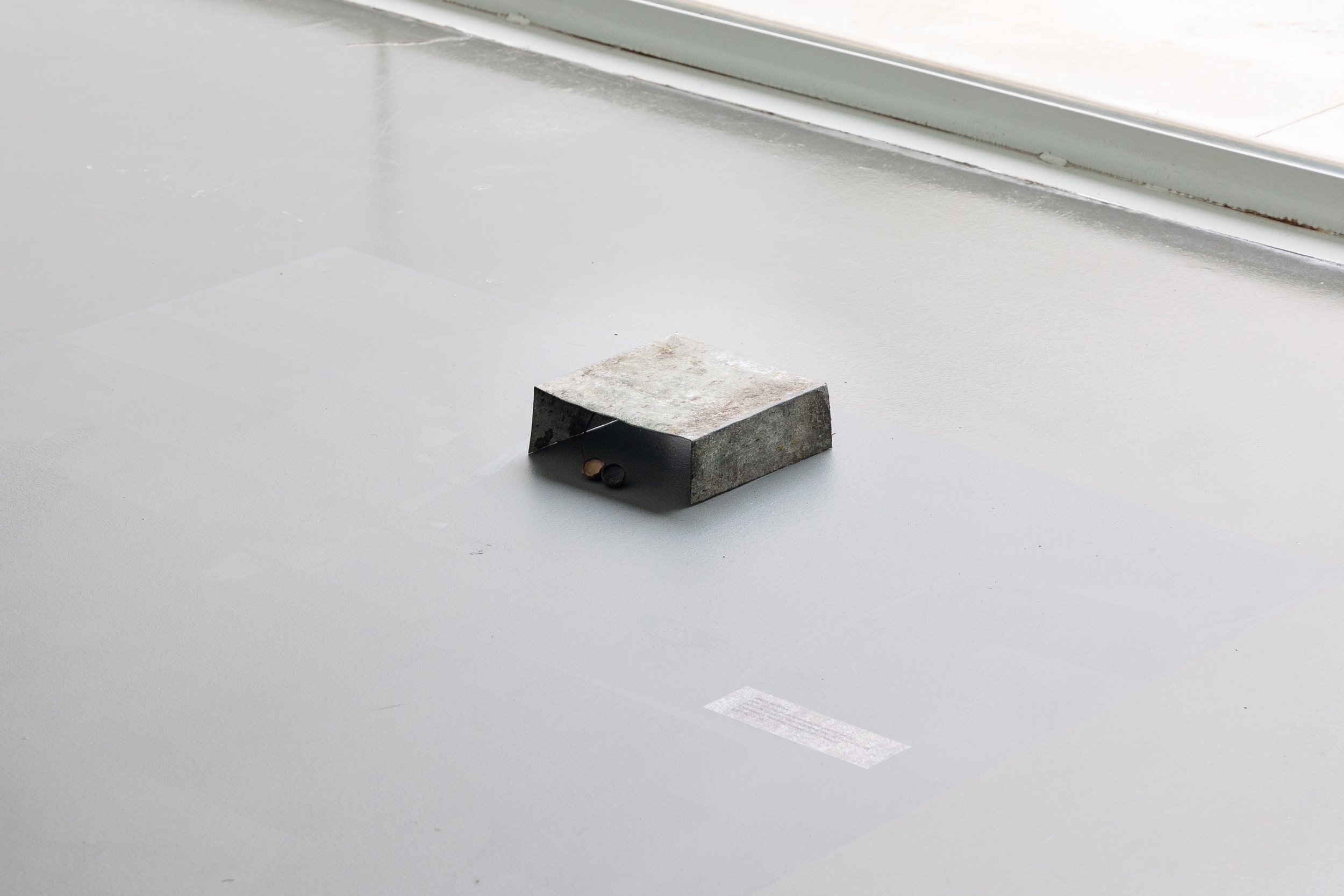
Diana de Brito observes transformation as an intimate experience of being in the world. Her works flicker between appearance and disappearance: beeswax poured into the hollows of a hand and then transferred into a drawing, creating an organic shape of chrysalis or heart. Two acorns exist together in the present and in the future, until they do not anymore, while they also exist in the past as a memory after a breakup or a loss. Likewise, the voice of a loved one echoes in memories as the voice of consciousness, through the teachings we have been given growing up. These words of care and guidance sustain us in coping with hard times.
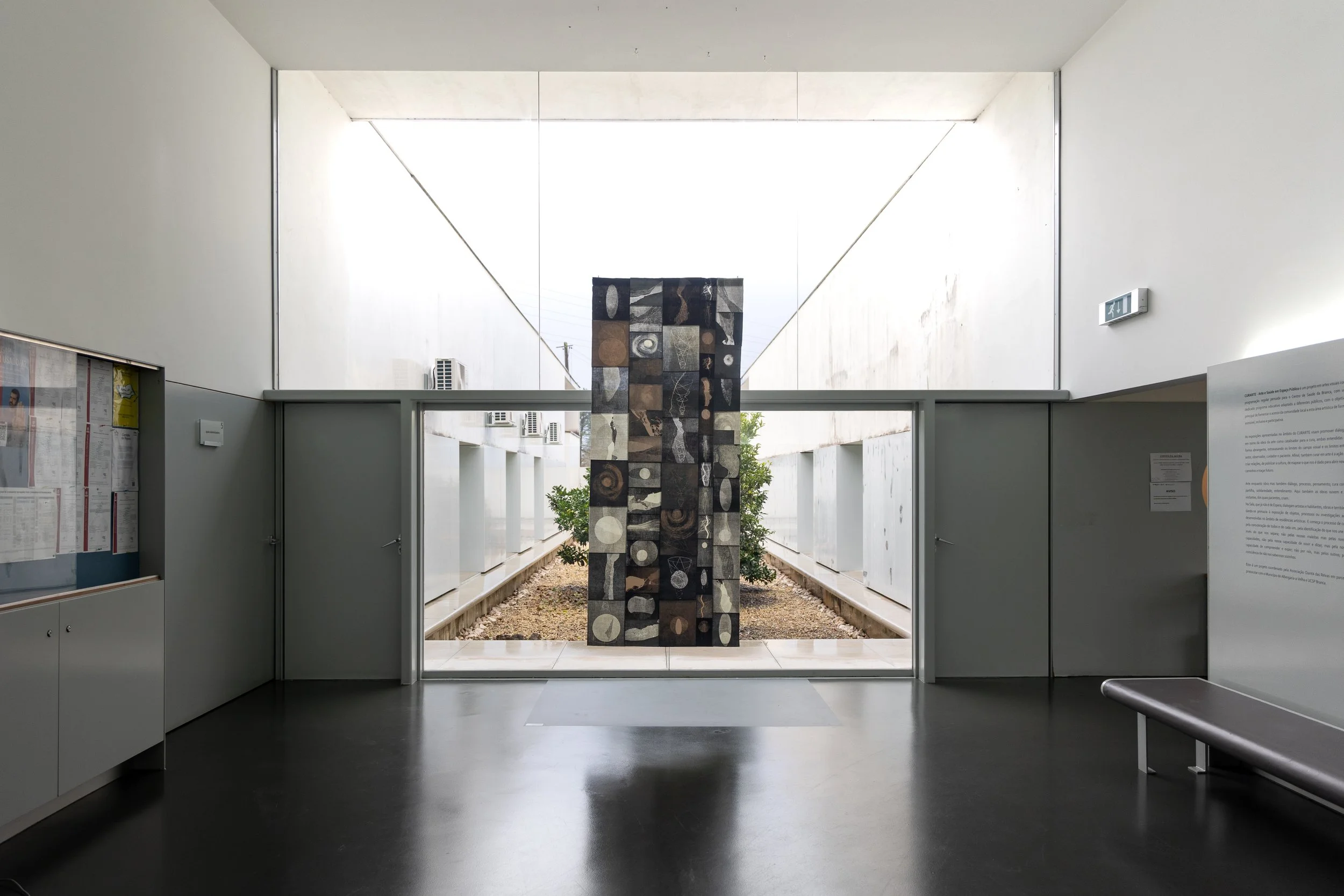
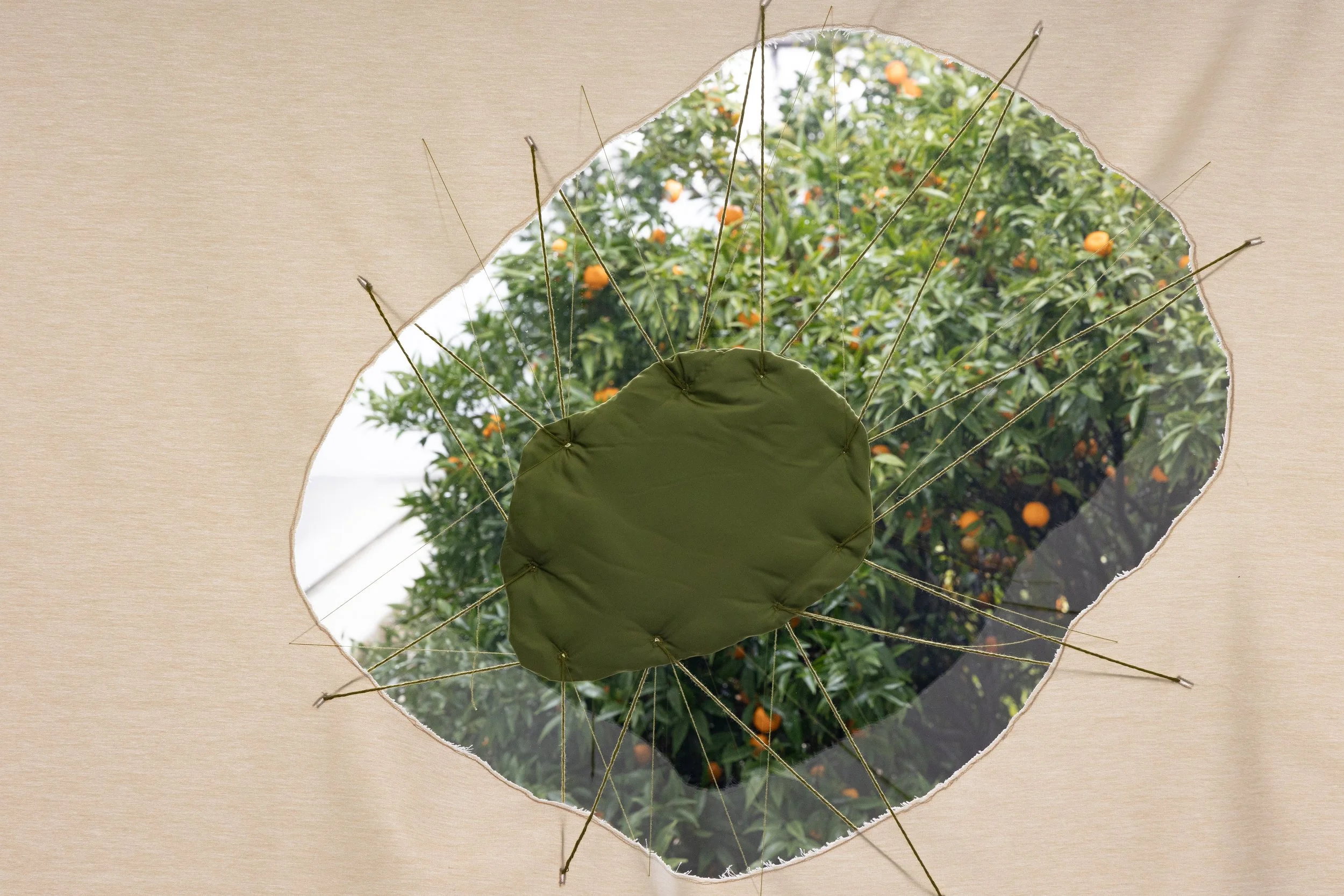
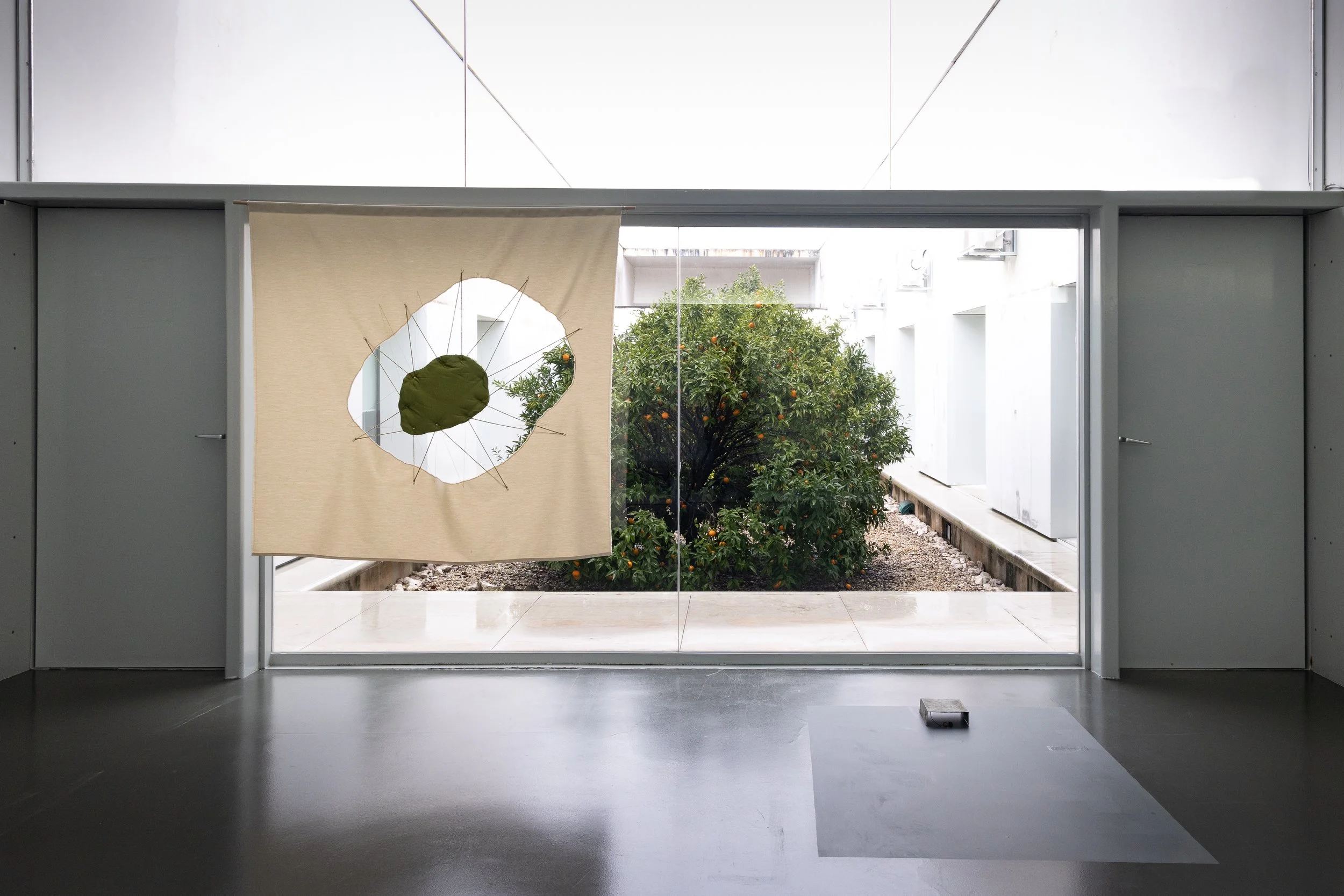
Sally Santiago uses the fertile void as a moment to reveal imaginary traces, perceive the experience of a place, and weave in it a new fictional reality. Through her tapestry of organic shapes and an accompanying poem below, she makes small unnoticeable gestures finally visible.
Nothing happens. Repeatedly.
Day after day, we exist in places suspended in time.
But time persists, in a fleeting constancy that opens space for an almost-nothing.
An almost, discreet and insistent, that carves its form between moments; that resonates through its passages and experiences; that clings to a tangle of routines, familiar paths, everyday conversations, and present times; that presents itself as the remainder of what we let pass — and that, fortunately, never lets us leave any place empty-handed.
Everything happens. Repeatedly.
The weight of those who hold their gaze ensures a silent experience and lists good reasons to live in pause.
And so, we exist in motion… in an ever-unfolding dimension of resonance.